Posts

Showing posts with the label Resilience

Philosophical phriday: looking forward to 2025

Image
I'm not a fan of new year's resolutions that tend (in my experience) to have limited impact and are often soon forgotten. My cynical self says the same thing applies to pledges, vows and other stated commitments, even agreements and contracts to some extent. They are more symbolic than actual control mechanisms (although I'm sure the lawyers would argue otherwise - on the clock, naturally). The focus is often on avoiding, preventing or stopping bad things, a negative emphasis although the actual language may be positive as in "I will lose weight" and "I will get fit". They can be a last resort, a sharp retrospective reminder of where we thought we were going when we are already heading off-course.

Philosophical phriday - recovering from ransomware takes HOW long?!

Image
Recovering from a ransomware incident is costlier, more complicated and much slower that people commonly assume. "Just restore the backups and you're good to go, right?". Spoiler alert: restoring networks and IT systems from backups is only a fraction of this.  Here's a reasonably complete set of ransomware recovery activities that would normally led by general business and IT managers : Wake up and smell the coffee! Deal with the unfolding crisis and a degree of confusion. Invoke the crisis management process. Settle things down. Assemble the business incident management team. Invoke the incident management process. Form the IT incident management team. Contact insurers, law enforcement and security experts for guidance.

Philosophical phriday - anticipation vs. prediction

Image
There is a growing appreciation, perhaps even consensus in the field that information risk management - or indeed risk management in general - is not simply a matter of predicting or controlling the future, at least not in a rational and deterministic manner. Given that the future is inherently complex and uncertain (= risky!), the best we can reasonably hope for is to reduce somewhat the number and negative impacts of disruptive events and incidents, while simultaneously hopefully increasing the chances and value of positive, beneficial outcomes. Both objectives are asymptotic: the effort and investment required to progress increase exponentially as we get ever closer to those two goals, ultimately putting them both beyond our means given finite resources (oh and one or two other things to pour our money into!). In other words, despite our best intentions, we know we are doomed to fail at some point.  Doomed I tell you. That's not merely a pessimistic outlook: I'm an optimist ...

Philosophical phriday - strategic risk management (LONG)

Image
Recently I enjoyed a lecture by a bank's economist to local business leaders concerning the NZ economy. Observing the blizzard of graphs, I was struck by his short timeline , stretching to about a couple of years ahead. Now I'm sure the economist is earning his crust at the bank. Of course they need to keep on top of day-to-day and month-to-month fluctuations in the economic parameters, playing the markets. Equally, I'm sure the bank has other experts with a longer-term outlook, diligently modelling the implications of national and global issues including political, social, environmental and technological, for many years or decades ahead - for at least as long as the bank's mortgages and business loan periods anyway. Nevertheless, that prompted me to think about planning horizons in information risk and security management, within the broader context of budgeting and investment management in any commercial organisation - a pertinent topic as we plummet towards the new c...

Phisosophical phriday - objectives of desire

Image
Objectives are king. If strategy is the organisational or personal journey ahead, we must truly understand our objectives to move ahead confidently in the right direction, systematically measuring progress towards those objectives.  If the objectives are uncertain, well, any path will do, and our measures are largely pointless: we may know how far we've come and how much fuel we've consumed so far but we're not sure how much further we need to go, nor in what direction and at what speed. That's sub-optimal. So far so good. But what if the objectives are hidden, in conflict, or not what they seem? There are clearly potential problems with objective-led approaches - a little seething cluster of problems in fact.  So, then, it seems objectives have objectives. 

Philosophical phriday - dealing with uncertainty

Image
Lately I've been pondering the thought that 'risk' is 'uncertainty' - it's not simply that risky decisions and activities involve some element of doubt, that they might work out extremely well or go horribly wrong, but that the lack of certainty is itself a critical factor. As well as the rational mathematical basis in probability theory and statistics , there is also an emotional aspect to uncertainty. It affects the way we perceive, prepare for and address issues. It affects our planning and capability. It can be debilitating, resulting in indecision and delay even though that may make things even worse: sometimes, it is better to make a decision now (despite the uncertainties) and press ahead in the belief that we will cope with whatever eventuates. Conversely, it may be better to delay a decision and hold back while gathering more information, building resources, preparing and aligning those involved, and considering various eventualities. Uncertainty ha...

Crowdstrike - post-incident review: a dozen learning points

Image
I blogged about the Crowdstrike incident on July 21st  while it was still playing out. Now, having  d rained the swamp and let the d ust settle, I'm  d ue to d raw out, d econstruct and d ecide what to d o about the Crowdstrike d isaster, so here goes: Design, build and test systems for resilience, where 'systems' means not just IT systems but the totality of interdependent technologies, organisations, people, information flows and other resources necessary to deliver and support critical business activities. Hinson tip : "be prepared" is not just for  boy scouts ! Those dependencies are p otential p inch p lus  p ain p oints. Test software before release. Sounds easy, right? It isn't. There is an infinite amount of testing that could be performed, only a fraction of which realistically should be, while the amount and quality of testing actually performed is resource-constrained and time-boxed for business and uncertainty (risk!) reasons (delaying secu...

Crowdstrike - a para-incident review

Image
We find ourselves in the midst of a classic social response to a significant incident - a heady blend of technobabble, confusion and hyperbole, with a sprinkling of genuinely helpful information, grief and support for those right in the thick of it, and warnings about the likelihood of further exploitation ... of ... the classic social response to a significant incident.  That's a positive feedback loop, amplified by the echo chambers of social media, and traditional news reporters whose job is (in part) to stir the pot and sell papers. "This is HUGE !" they tell us, breathlessly. "Bigger than a really big thing, and still growing!"  According to the din just on LinkeDin over the weekend, the Crowdstrike incident is "a major global outage", a " mass global outage and major impact to services",  "carnage", "cataclysmic", "global chaos", the "patchpocalypse", "digital catastrophe", "the bi...

Adaptive SME security Crowdstrike special

Image
As if on cue, along comes a golden opportunity to consider what the Adaptive SME security  approach has to say regarding the Crowdstrike incident: That's not 20/20 hindsight but foresight: I've picked out the most relevant rows from the security controls table published in the guide 24 hours before the incident.  Although Crowdstrike primarily supplies much larger enterprises than SMEs, the incident could equally have afflicted other security software, or indeed operating systems such as Windows and assorted cloud apps commonly used by SMEs. Regardless of the details, it is a wake-up call, an opportunity to consider and respond to the information risks ... and to adapt , accordingly.

An evolutionary revolution?

Image
"Mitigation and adaptation are required together to reduce the risks and impacts of climate change, including extreme weather events. Mitigation refers to actions taken to limit the amount of greenhouse gas emissions, reducing the amount of future climate change. Adaptation refers to actions taken to limit the impacts of a changing climate. Mitigation and adaptation together provide co-benefits for other environmental and social goals." That paragraph by Lizzie Fuller, Climate Science Communicator for the UK's Met Office, plucked from another excellent digest of lessons learned from various UK resilience exercises and initiatives , obviously con cerns climate change ... but it occurs to me that 'mitigate and adapt' might be a novel approach to information risks and impacts as well.

A nightmare on DR street

Image
A provocative piece on LinkeDin by Brian Matsinger caught my beady eye and sparked my fertile imagination today. I'm presently busy amplifying the disaster recovery advice in NIS 2 for a client. When I say 'amplifying', I mean generating an entire awareness and training piece on the back of a single mention of 'disaster recovery' in all of NIS 2. Just the one. Blink and you'll miss it. Oh boy. Anyway, Brian points out that recovering from disasters caused by 'cyber attacks' requires a different DR approach than is usual for physical disasters such as storms, fires and floods. Traditional basic DR plans are pretty straightforward: essentially, the plans tell us to grab recent backups and pristine systems, restore the backups onto said systems, do a cursory check then release services to users. Job's a good 'un, off to the pub lads.

ISMS implementation project guidance checklist

Image
This checklist is appended to a SecAware guideline on implementing an ISMS , elaborating clause-by-clause on ISO/IEC 27001 - essentially, our version of ISO/IEC 27003 .   It offers  pragmatic guidance for information security managers and CISOs - nothing too obscure or complex. ---oooOOOooo--- Project definition, justification, scoping and planning ⬚   Study the standards, in depth: complete lead implementer training if possible. ⬚   Study the business, in depth, to understand its objectives, strategies, culture, governance arrangements, existing information risk and security management etc . ⬚   If the organisation has a defined, structured approach for this phase, use it! ⬚   Build a business case that identifies and promotes the business benefits of the ISMS. ⬚   Look beyond ‘security’ and ‘compliance’ e.g . helping management to manage business risks, supporting/enabling other business initiatives and strategies.

Mil-spec management lessons

Image
  "A calamity can often strike without warning. Whether it be generated by humans or a natural disaster, leaders need to be ready to direct their teams in the aftermath. In order to be ready for crisis, leadership skills, like any others, must be practised over and over beforehand. So the way you lead in the quiet times helps to build the skills you need when you have to dig deep." That paragraph plucked from this month's impressive  NZ Airforce newsletter  about the military response to the devastating flooding caused by cyclone Gabrielle here in Hawkes Bay caught my beady eye this morning.  The idea of practicing incident management as well as incident handling or operations  on relatively small incidents makes perfect sense.

27001 & climate change (FREE!)

Image
Like other ISO management systems standards, ISO/IEC 27001:2022 has just been amended to incorporate two small wording changes : “The organization shall determine whether climate change is a relevant issue” (clause 4.1); “NOTE: Relevant interested parties can have requirements related to climate change.” (clause 4.2). So, it is fair to ask what has climate change got to do with information risk and security? Is it even relevant? Having been been mulling that over for quite some while now, I've come up with a dozen points of relevance: For more on those twelve, read " Secure the Planet " - a FREE white paper. The clock in that image is a reminder that time is pressing, so here are half-a-dozen things information risk and security professionals can do to help.

BCM for WFH

Image
Since home and mobile workers rely on IT to access critical business systems and corporate data, and to communicate with others, organisations need a robust IT network infrastructure that extends to workers' homes or wherever they hang out. If, in reality, the infrastructure turns out to be fragile and unreliable, business activities are likely to be equally fragile and unreliable, leading to frustration and grief all round. In other words, the extended IT infrastructure is quite likely business-critical. W orking F rom H ome or on the road can increase various information risks relative to conventional office-based work, due to factors such as: Use of cloud computing services*; Workers using their own or shared devices and internet connections for work purposes, raising questions about their suitability and security, ownership of and access to any intellectual property or personal information on them;

Incident notification procedure [UPDATED x2]

Image
I have developed a generic procedure documenting the incident notification process  for sale through  SecAware .  I'm surprised how involved, complex, time-boxed and fraught the disclosure process turned out to be - depending, of course, on the nature and scale of the incident (perhaps a ransomware or malware infection, privacy breach, hack or fraud), who needs to be informed about it, and how to do so.

Black hawk down ... but not out

Image
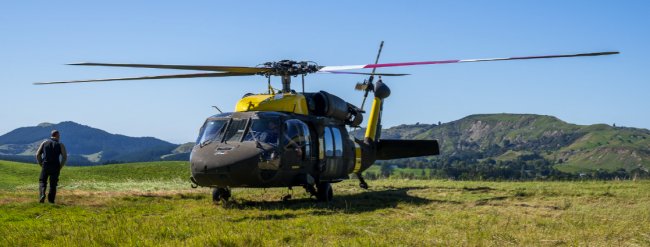
I've long been fascinated by the concept of 'resilience', and surprised that so many people evidently misunderstand and misrepresent it ... so please bear with me as I attempt to put the record straight by explaining my fascination. Resilience is not simply:  Being secure Being strong Recovering effectively, efficiently or simply recovering from incidents Avoiding or mitigating incidents Any specific technical approach or system Any particular human response, action or intent A backstop or ultimate control Heroic acts A construct, something we design and build Something that can simply be mandated or demanded Specific to particular circumstances, situations or applications It's bigger than any of those - in fact bigger than all of them, combined. Resilience is all of those, and more ... Resilience is : A general concept, a philosophy, a belief An engineering and architectural approach

The power of power measurement

Image
Electrical power consumption by a computer cupboard, IT room, tech suite, data centre or facility  is one of my favourite [pet!] metrics   for several reasons: It is readily measured using a wattmeter, watt-hour meter or ammeter on the main supply line/s; Compared to more technical metrics, power is simple to plot, report, explain and understand; As the installed IT equipment and usage gradually changes, so does the power consumption. It is straightforward to track and predict the overall trends without necessarily measuring and controlling every single item and change;  Step changes in power consumption indicate substantial changes in the IT equipment or usage. Marked decreases are welcome but quite rare ( e.g . as older equipment is retired from service or replaced by more modern, energy-efficient stuff), whereas marked increases in consumption - especially if unexpected - may be cause for concern; The first law of thermodynamics tells us that all the input energy has t...

Information risk management, a business imperative

Image
Information risk management is a crucial business issue in the digital age. This piece describes a systematic and proactive approach to information risk management with a healthy dose of pragmatism. It is obvious that serious incidents such as ransomware can disrupt operations, severely damaging an organisation's reputation, brands and customer trust, threatening its financial stability and longevity ... but that's not all. Even relatively minor incidents can accumulate significant costs over time, starving other important business activities of resources. Given that practically everything depends on information, the starting point is to embed information risk management fully into the organisation's business strategy and routine operations. Most organisations have basic information security controls in place. However, a strategic approach is less common, while a truly comprehensive business-oriented  approach to information risk management remains quite rare.  Information ...

Why get ISO 27001 certified?

Image
If you have designed and implemented an I nformation S ecurity M anagement S ystem based on ISO/IEC 27001 , you should be realising a variety of business benefits through improved information risk and information security management.  Fantastic! The international standard specifies a framework, a rational structure with which to identify, evaluate and treat the organisation's information risks systematically.  The framework is a tool that enables senior management to govern and manage the information risk and security activities in ways that align with and support the achievement of business objectives, plus obligations to or expectations of third parties. Through strategies, policies and procedures, plus measurement and assurance processes, management has the levers to direct,  organise and oversee a more efficient and effective approach to information risk and security.  Information risks are systematically prioritised for treatment using suitable security controls...