Posts

Showing posts with the label Safety

Crowdstrike - post-incident review: a dozen learning points
Image
I blogged about the Crowdstrike incident on July 21st  while it was still playing out. Now, having  d rained the swamp and let the d ust settle, I'm  d ue to d raw out, d econstruct and d ecide what to d o about the Crowdstrike d isaster, so here goes: Design, build and test systems for resilience, where 'systems' means not just IT systems but the totality of interdependent technologies, organisations, people, information flows and other resources necessary to deliver and support critical business activities. Hinson tip : "be prepared" is not just for  boy scouts ! Those dependencies are p otential p inch p lus  p ain p oints. Test software before release. Sounds easy, right? It isn't. There is an infinite amount of testing that could be performed, only a fraction of which realistically should be, while the amount and quality of testing actually performed is resource-constrained and time-boxed for business and uncertainty (risk!) reasons (delaying secu...

An evolutionary revolution?

Image
"Mitigation and adaptation are required together to reduce the risks and impacts of climate change, including extreme weather events. Mitigation refers to actions taken to limit the amount of greenhouse gas emissions, reducing the amount of future climate change. Adaptation refers to actions taken to limit the impacts of a changing climate. Mitigation and adaptation together provide co-benefits for other environmental and social goals." That paragraph by Lizzie Fuller, Climate Science Communicator for the UK's Met Office, plucked from another excellent digest of lessons learned from various UK resilience exercises and initiatives , obviously con cerns climate change ... but it occurs to me that 'mitigate and adapt' might be a novel approach to information risks and impacts as well.

27001 & climate change (FREE!)

Image
Like other ISO management systems standards, ISO/IEC 27001:2022 has just been amended to incorporate two small wording changes : “The organization shall determine whether climate change is a relevant issue” (clause 4.1); “NOTE: Relevant interested parties can have requirements related to climate change.” (clause 4.2). So, it is fair to ask what has climate change got to do with information risk and security? Is it even relevant? Having been been mulling that over for quite some while now, I've come up with a dozen points of relevance: For more on those twelve, read " Secure the Planet " - a FREE white paper. The clock in that image is a reminder that time is pressing, so here are half-a-dozen things information risk and security professionals can do to help.

eWaste safety hazards and information risks

Image
A warning in the New Zealand Information Security Manual  caught my beady eye yesterday: “Electrical and electronic equipment contains a complex mix of materials, components and substances, many which can be poisonous, carcinogenic or toxic in particulate or dust form. Destruction and disposal of WEEE [Waste from Electrical and Electronic Equipment] needs to be managed carefully to avoid the potential of serious health risk or environmental hazard.” Disposing of eWaste presents environmental and safety hazards arising from noxious/toxic/carcinogenic chemicals such as gallium arsenide (GaAs) and polychlorinated biphenyls (PCBs), plus the obvious dangers when handling sharp-edged metal or plastic chassis fragments, wires, printed circuit boards and CD/DVD discs plus  leaky electrolytic capacitors and old batteries . While there may be money to be made by extracting and recycling valuable metals  and reusable components ,  subsystems and modules , that's really a jo...

Black hawk down ... but not out

Image
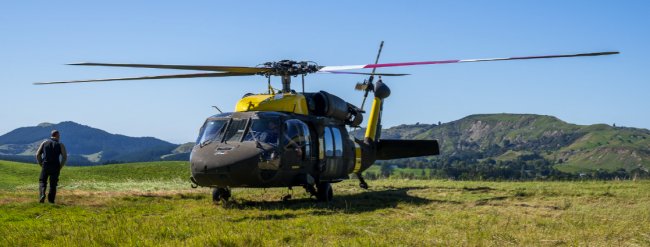
I've long been fascinated by the concept of 'resilience', and surprised that so many people evidently misunderstand and misrepresent it ... so please bear with me as I attempt to put the record straight by explaining my fascination. Resilience is not simply:  Being secure Being strong Recovering effectively, efficiently or simply recovering from incidents Avoiding or mitigating incidents Any specific technical approach or system Any particular human response, action or intent A backstop or ultimate control Heroic acts A construct, something we design and build Something that can simply be mandated or demanded Specific to particular circumstances, situations or applications It's bigger than any of those - in fact bigger than all of them, combined. Resilience is all of those, and more ... Resilience is : A general concept, a philosophy, a belief An engineering and architectural approach

The power of power measurement

Image
Electrical power consumption by a computer cupboard, IT room, tech suite, data centre or facility  is one of my favourite [pet!] metrics   for several reasons: It is readily measured using a wattmeter, watt-hour meter or ammeter on the main supply line/s; Compared to more technical metrics, power is simple to plot, report, explain and understand; As the installed IT equipment and usage gradually changes, so does the power consumption. It is straightforward to track and predict the overall trends without necessarily measuring and controlling every single item and change;  Step changes in power consumption indicate substantial changes in the IT equipment or usage. Marked decreases are welcome but quite rare ( e.g . as older equipment is retired from service or replaced by more modern, energy-efficient stuff), whereas marked increases in consumption - especially if unexpected - may be cause for concern; The first law of thermodynamics tells us that all the input energy has t...

Two dozen data centre fire controls

Image
Fire is clearly a significant risk to any data centre given that  a major incident (disaster!) is reported globally roughly every quarter year on average  plus an unknown number of smaller/unreported ones. Limited public disclosure of data centre fire investigation reports makes it tough, even for experienced professionals , to assess and quantify the risk.  However, s ince the likely impacts and costs of such major incidents are obviously non-trivial and the number of incidents is definitely not zero, it would be negligent to ignore the risks. Controls to avoid, mitigate or share data centre/IT facility fire risks include: Governance and management arrangements taking due account of information risks including physical security aspects when designing and procuring information services such as commercial cloud services and data centre/co-location facilities - which, by the way, don't automatically reduce

COVID information risk analysis - retrospective

Image
Two and a half years ago in March 2020 as we were fast approaching our first lockdown, I published the following P robability I mpact G raph depicting my analysis of the information risks relating to COVID: The PIG reports the information risks I identified at the time, thinking about COVID from the general societal perspective as opposed to a personal or organisational perspective.

7 security culture strengtheners

Image
Given research indicating that security culture trumps security policies , how can we strengthen the corporate security culture? Here are a few ideas to set you thinking:

Skyscraper of cards

Image
Having put it off for far too long, I'm belatedly trying to catch up with some standards work in the area of R oot o f T rust, which for me meant starting with the basics, studying simple introductory articles about RoT. As far as I can tell so far, RoT is a concept -  the logical basis, the foundation on which secure IT systems are built. 'Secure IT systems' covers a huge range. At the high end are those used for national security and defence purposes, plus safety- and business-critical systems facing enormous risks (substantial threats and impacts). At the low end are systems where the threats are mostly accidental and the impacts negligible - perhaps mildly annoying. Not being able to tell precisely how many steps you've taken today, or being unable to read this blog, is hardly going to stop the Earth spinning on its axis. In fact' mildly' may be overstating it. 'Systems' may be servers, desktops, portables and wearables, plus IoT things and all mann...

ISO/IEC 27400 IoT security and privacy standard published

Image
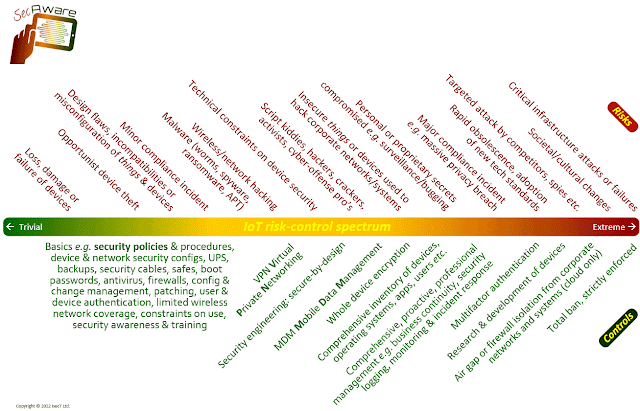
To celebrate the publication of ISO/IEC 27400:2022 today, we have slashed the price for our IoT security policy templates to just $10 each through SecAware.com. IoT policy is the first of the basic security controls shown on the 'risk-control spectrum' diagram above, and is Control-01 in the new standard ... Do you have a security policy on IoT? If not, does that mean IoT is out of control in your organisation? Even if you do, what does it say? Is it valid, appropriate, worthwhile, sufficient?   The spectrum diagram shows quite a variety of risks and controls, but it is merely a summary, selected highlights. Attempting to cover them all in a policy document would be counterproductive - in fact, general employees can barely cope with a much-simplified one-page 'acceptable use policy'.   The new ISO/IEC 27400 standard takes a broad perspective with copious advice on information security and privacy for the designers, manufacturers, purchasers, users and administrators o...

The TEN controls ISO/IEC 27002 missed

Image
Despite the excellent work done to restructure and update the standard, I still feel some commonplace 'good practice' information security controls are either M issing I n A ction or inadequately covered by ISO/IEC 27002:2022 , these nine TEN for example: Business continuity controls, covering resilience, recovery and contingency aspects in general, not just in the IT security or IT domains. ISO 22301 is an excellent reference here, enabling organisations to identify, rationally evaluate and sensibly treat both high probability x low impact and low probability x high impact information risks (the orange zone on probability impact graphics), not just the obvious double-highs (the reds and flashing crimsons!). Therefore, '27002 could usefully introduce/summarise the approach and refer readers to '22301 and other sources for the details. Availability and integrity controls supporting/enabling the exploitation of high-quality, up-to-date, trustworthy business information a...

An important lesson from the Farcebook Fiasco 2021

Image
I gather from friends and the news media that there was an unplanned outage earlier this week at Facebook. I'm told that Facebook is a fairly popular social media platform - some have said addictive. As you can no doubt tell, I don't see the attraction and I'm definitely not hooked. If it weren't for the brouhaha, I wouldn't have even noticed, let alone worried or written about it. I understand the outage was caused by a technical issue in the network - something to do with the BGP configuration. I'm not particularly interested in, and probably wouldn't even understand, the details. The self same issue locked Facebook's IT administrators out of their own systems, leaving them cut off and unable to address/reverse/fix the issue for several hours, causing mild panic and a little outrage among its users, customers and other stakeholders. The same issue took down related websites too. Doubtless the admins were stressed out, possibly frantic, while their mana...

Book review: The Resilient Enterprise

Image
Just a brief note today: it's a lovely sunny Saturday morning down here and I have Things To Do . I'm currently enjoying another book by one of my favourite tech authors: Yossi Sheffi's The Resilient Enterprise *. As always, Yossi spins a good yarn, illustrating a strong and convincing argument with interesting, relevant examples leading to sound advice. Specifically, I'm intrigued by the notion that major incidents/disasters leading to severe business disruption may not come "out of the blue". Sometimes (quite often?), there are little warning signs, hints ahead of time about the impending crisis, chances for alert business people to look up from the daily grind and perhaps brace for impact. It ought to be possible to spot fragile supply chains, processes, systems and people, provided we are looking out for them ...    Here in NZ at the moment, we are being treated to a public safety campaign using the analogy of meerkats, encouraging Kiwis to be constantly o...

Policy development process: phase 2

Image
Today we completed and published a new "topic-specific" information security policy template on clear desk and screen . Having previously considered information risks within the policy scope, writing the policy involved determining how to treat the risks and hence what information security or other controls are most appropriate.   Here we drew on guidance from the ISO27k standards, plus other standards, advisories and good practices that we've picked up in the course of ~30 years in the field, working with a variety of industries and organizations - and that's an interesting part of the challenge of developing generic policy templates. Different organizations - even different business units, departments, offices or teams within a given organization - can take markedly different attitudes towards clear desk and screen. The most paranoid are obsessive about it, mandating controls that would be excessive and inappropriate for most others. Conversely, some are decidedly l...

March 26 - NZ lockdown day 1 of N

Image
From midnight last night, New Zealand is now at civil emergency "stage 4", which means all except essential services personnel are supposed to stay isolated at home for about a month. The official NZ government list of essential services appears to have been finalised and published hastily. Naturally, 'the authorities' consider themselves essential as overnight we've become a police state: police and courts are working through the lockdown, albeit providing limited services, health and immigration/customs services too. What will happen as their workers are or suspect themselves to be infected with coronavirus is unclear at this point. Presumably they have contingency plans, plus controls to limit the spread of infection within police stations, court houses, hospitals, customs halls, mail sorting offices etc.  ... but staffing and service problems are entirely possible as the lockdown continues. Since they aren't entirely self-contained , there's also a se...

Live-fire continuity exercises

Image
Yesterday I blogged about the advantages and disadvantages of business continuity exercises. Today's topic concerns the alternative approaches, in particular the idea of 'live-fire' exercises in the business continuity context. Vast tracts of prime agricultural land are set aside as military training grounds, allowing the armed forces to practice their manoeuvres and, sometimes, fire actual bullets, mortars, missiles and bombs. Real ones, not dummies.  There are, of course, certain health and safety risks associated with weapons (!), so why take the risks? What are the benefits of not using blanks and simulations? Two obvious reasons are: To test, prove and improve the weapons, for example confirming the accuracy, range and effectiveness of a field gun firing live rounds towards a tank, building or bunker, with gusting cross winds, challenging terrain, engineering and operational variables. To practice, test, prove and improve the soldiers' capabilities, including deal...

Risk treatments

Image
Yesterday I wrote about what the White Island eruption teaches us about risk management, in particular the way we decide how to deal with or "treat" identified risks.  ISO/IEC 27005 describes 4 risk treatment options: Avoid  the risk by deliberately not getting ourselves into risky situations - not getting too close to a known active volcano for example; Modify  the risk: typically we mitigate (reduce) the risk through the use of controls intended to reduce the threats or vulnerabilities and hence the probability, or to reduce the impacts; Retain the risk: this is the default - more on this below; Share the risk: previously known as "risk transfer", this involves getting the assistance of third parties to deal with our risks, through insurance for instance, or liability clauses in contracts, or consultants' advice. Risk management standards and advisories usually state or imply that these 'options' are exclusive, in other words alternatives from which w...

A brutal lesson in risk management

Image
Yesterday's volcanic eruption on White Island is headline news around the globe , a tragedy that sadly resulted in several deaths, currently estimated at 13.   Also, yesterday in NZ there were roughly 90 other deaths (as there are every day), roughly two thirds of which were caused by cardiovascular diseases or cancer: So, yesterday, the proportion of deaths in NZ caused by "Natural disasters" spiked from 0% to 13%. Today, it is likely to fall back to 0%.  "Natural disasters" will have caused roughly 0.04% of the ~33,500 deaths in NZ during 2019 ... but judging by the news media coverage today, you'd have thought NZ was a disaster zone, a lethal place - which indeed it is for ~33,500 of us every year. Very very few, though, expire under a hail of molten rock and cloud of noxious fumes, viewable in glorious Technicolor on social media. Those 13 tourists who perished yesterday chose to see NZ's most active volcano up close, real close. You may be thinking...

Super management systems

Image
ISO 22301, already an excellent standard on business continuity, has just been revised and republished.  Advisera has a useful page of info about ISO 22301 here . There’s quite a bit of common ground between business continuity and information risk and security, especially as most organizations are highly dependent on their information, IT systems and processes.  T he most significant risks are often the same, hence it makes sense to manage both aspects competently and consistently.   The ISO ‘management system’ structured approach is effective from the governance and management perspective.   Aligning/coordinating the infosec and business continuity management systems has several valuable benefits since they are complementary.  Extending that thought, it occurs to me that most if not all other areas of management also have information risk and security implications: Physical site security and facilities management ( e.g.  reliable power and cooling for the...