Posts

ISO 27001 templates and services on sale

Image
For organisations planning to implement ISO/IEC 27001 for the first time, the standard's requirements can be confusing, especially given the amount of dubious advice available on the web. For instance, one issue that crops up frequently on the ISO27k Forum and here on the blog is that the information security controls in Annex of the standard A are not required - in fact, they are not even recommended or suggested, despite what some non-experts advise. Annex A is provided as a checklist, a prompt to ensure we have considered a wide range of information risks.  The standard's main body clauses, in contrast, formally specify the functional requirements for an I nformation S ecurity M anagement S ystem. In order for an organisation to be certified, the ISMS must be designed to fulfil the specified requirements, and must be operational, managing whatever information security controls and other treatments are appropriate given the organisation's information risks.  In short,...
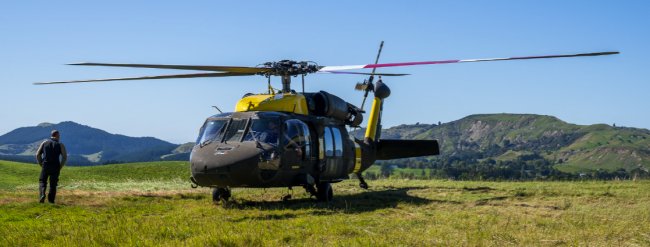
Black hawk down ... but not out

Image
I've long been fascinated by the concept of 'resilience', and surprised that so many people evidently misunderstand and misrepresent it ... so please bear with me as I attempt to put the record straight by explaining my fascination. Resilience is not simply:  Being secure Being strong Recovering effectively, efficiently or simply recovering from incidents Avoiding or mitigating incidents Any specific technical approach or system Any particular human response, action or intent A backstop or ultimate control Heroic acts A construct, something we design and build Something that can simply be mandated or demanded Specific to particular circumstances, situations or applications It's bigger than any of those - in fact bigger than all of them, combined. Resilience is all of those, and more ... Resilience is : A general concept, a philosophy, a belief An engineering and architectural approach

Using AI/ML to draft policy

Image
This week, I am preparing a new template for the SecAware policy suite covering the information risks and security, privacy, compliance, assurance and governance arrangements for A rtificial I ntelligence or  M achine L earning systems. With so much ground to cover on this complex, disruptive and rapidly-evolving technology, it is quite a challenge to figure out the key policy matters and express them succinctly in a generic form. Just for kicks, I set out by asking GPT-4 to draft a policy but, to be frank, it was more hindrance than help. The draft was quite narrowly focused, entirely neglecting several relevant aspects that I feel are important - the information risks arising from the use of commercial AI/ML services by workers, for instance, as opposed to AI/ML systems developed in-house. The controls it espoused were quite vague and limited in scope, but that's not uncommon in policies. It noted the need for accountability, for instance, but didn't clarify the reasons nor...

Metrics episode 1

Image
Choosing/designing, using and improving metrics can be modeled as a rational process: A. The starting point is to determine or clarify the ultimate/strategic goals for the area being measured (e.g. information risk and security management), plus any interim/tactical objectives , preferably in business terms. These may already be documented in the form of, for example, the rationale in a business case proposing an ISO/IEC 27001-style  I nformation S ecurity M anagement S ystem, the mission statement for the Information Risk and Security department/function, and/or the organisation’s information risk management strategies. B. The information risk and security goals and objectives will often beg questions or imply success/fail criteria. For example, the objective “To comply with applicable legal, regulatory and contractual obligations concerning information security and privacy” begs questions about the nature and number of those obligations, the compliance status, the costs...

ISMS support tools (episode 4 of 4)

Image
This final episode in the series about specifying and selecting ISMS support tools/systems concerns the general usability requirements typical of almost any computer system, such as: Intuitive, easy to use; Interoperable; Facilitates customisation where appropriate; Readily maintained; Well supported, documented  etc .;

ISMS support tools (episode 3 of 4)

Image
So far, I've waffled on about the variety of ISMS support tool types on the market , and about gross differences between ISMS user organisations in terms of industry, size etc . Next, think about the kinds of things they might expect their ISMS support tools to do. Digging beneath the superficial "support our ISO/IEC 27001 ISMS", organizations may well expect/require the tools to help them with security controls such as: Access rights and permissions; Alerts or alarms; Anti-spam; Antivirus; Assorted security processes; Backups;

ISMS support tools (episode 2 of 4)

Image
Previously I blogged about the bewildering variety of tools, systems and services supporting ISO/IEC 27001 Information Security Management Systems . The tools, in turn, are being used in various ways for various purposes by a bewildering range of organisations. The ISMS specified by ISO/IEC 27001 is "intended to be applicable to all organizations, regardless of type, size or nature", a deliberately broad scope that takes in: Conventional commercial companies, government agencies and departments, charities and not-for-profits, conglomerates, kieretsu and groups, schools, colleges and universities ...;  Organisations of all sizes, micro-to-macro;